
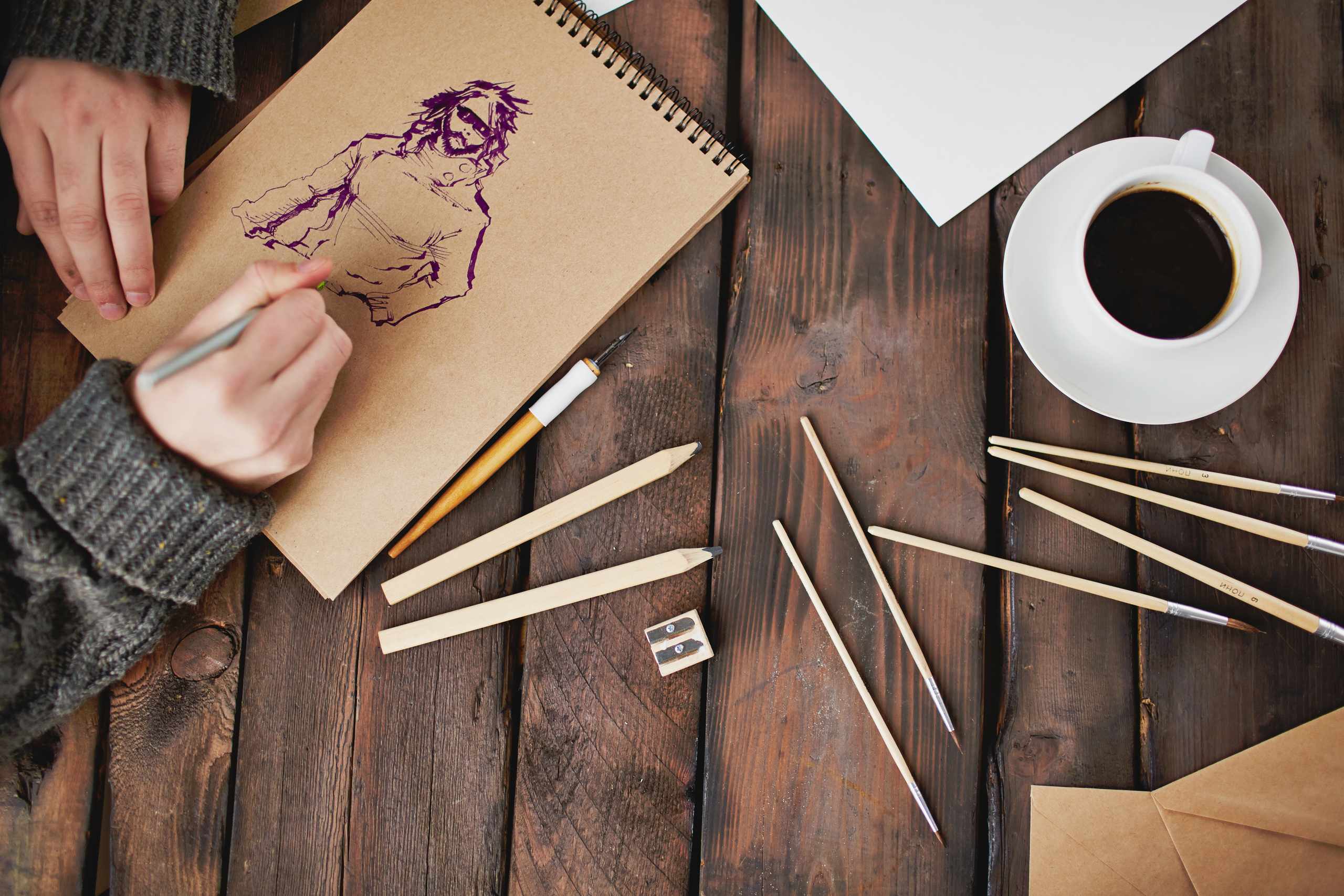
So, what is it that usually makes a drawing habit fail? In most cases, it’s because your session asks for too much. When you sit down at an empty page, it doesn’t seem like a big deal, but then slowly, without you realizing, that blank space turns into pressure to make something impressive, finished, and something you want to keep around you. That pressure is what makes it harder to actually get going, especially on those average days when you’re already feeling tired and your attention is all over the place. Instead, build the habit for a smaller goal that’s easier to repeat. Don’t ask for a piece. Ask for a task. Draw one object. Look at one shadow. Do one kind of line. When your session is specific, it’s easier to get your hand working and it’s easier to look at the page as a place to work rather than as a place to prove something.
If you anchor your drawing practice to something you already do every day, the practice grows a lot more naturally. That thing doesn’t need to be fancy. It can be right after you make your tea, before you eat, or in that quiet moment at the end of the evening when your table is clear of dinner stuff. Just make sure your cue remains the same. And when you’ve got a rhythm like this going, make your setup simple enough to start quickly. Have paper easy to reach. Have a pencil that’s sharpened. Work on things near you, like a mug, a set of keys, some scissors, a piece of fruit, or even just crumpled paper or cloth. The trick is the first minute of practice needs to not feel too difficult. If you have to go hunting for stuff, think about the object, get your space ready, and make a decision about what you’re going to do, the practice starts to feel more burdensome than it should be.
A lot of artists are also guilty of trying to address everything all at once. That’s probably not going to be successful. You’ll probably end up with pages that don’t have anything focused. A tiny bit of contouring, a tiny bit of shading, a tiny bit of detail. And there will be not as much growth and improvement. A better plan is to address just one thing during each short session. You might spend one evening getting to the point of drawing in a more accurate proportion by checking the height and width. Maybe another day it might be about drawing clean and smooth ellipses around cups and bowls. Still another day it could be about drawing shadow shapes, not getting too much shading. This doesn’t make it narrower or more repetitive. It makes the pages more useful. You see the things that are important quicker, and your hand gets quicker because the demand was specific for longer.
If you can set aside a fifteen-minute block, there’s still a lot you can get done if you’re clear on how to split your time. During the first three minutes, look at one simple object very carefully, then get that big shape on the page in really light lines. In five minutes, get the major shape on your drawing, make any big proportion fixes and don’t do any shading at this point. Then spend four minutes refining, but just one issue. Get one part of an edge at the right angle. Get the correct proportions to an ellipse. Make a clear border of the dark shadow. Then, in your final three minutes, put yourself back into your drawing for your reflection and take notes. Write down one thing that went well and one thing that you felt drifted from it. Something like “the bottom edge came up too much” or “the shadow shape helped give that more structure.” It might seem really small, but it helps you go into the next session with the pages telling you what to look for.
There are bound to be days when you don’t feel like practicing. It’s probably going to be wobbly and maybe you won’t feel like you’re noticing or anything’s really improving. If that’s the case, just make your expectation for the session really easy. Work on the same thing you worked on yesterday. Do just shapes, just lines. Copy something simple in your room from two different angles. Because if you think you have to stop when something goes badly, your habit is going to be hard. You’ll skip days, you’ll lose track, and you’ll end up in a place of never practicing or getting frustrated and stopping. Missing one day, it’s not a big deal. But missing two days is when your habit really gets messed up. Even if your page has just three minutes of bad practice on it, it still keeps your habit alive.
Eventually, your habit will change the way you look before your style starts to develop. You’ll get better at checking out angles and proportions and form and shapes. You’ll start to really see the everyday stuff as something worth working on and practicing. That is really when you start to think that drawing is something that you just do, it’s not just something you fit in somewhere. You don’t have to have free time or constant inspiration, you just have to keep showing up again and again, each time to get a little more and each time to get a little better.